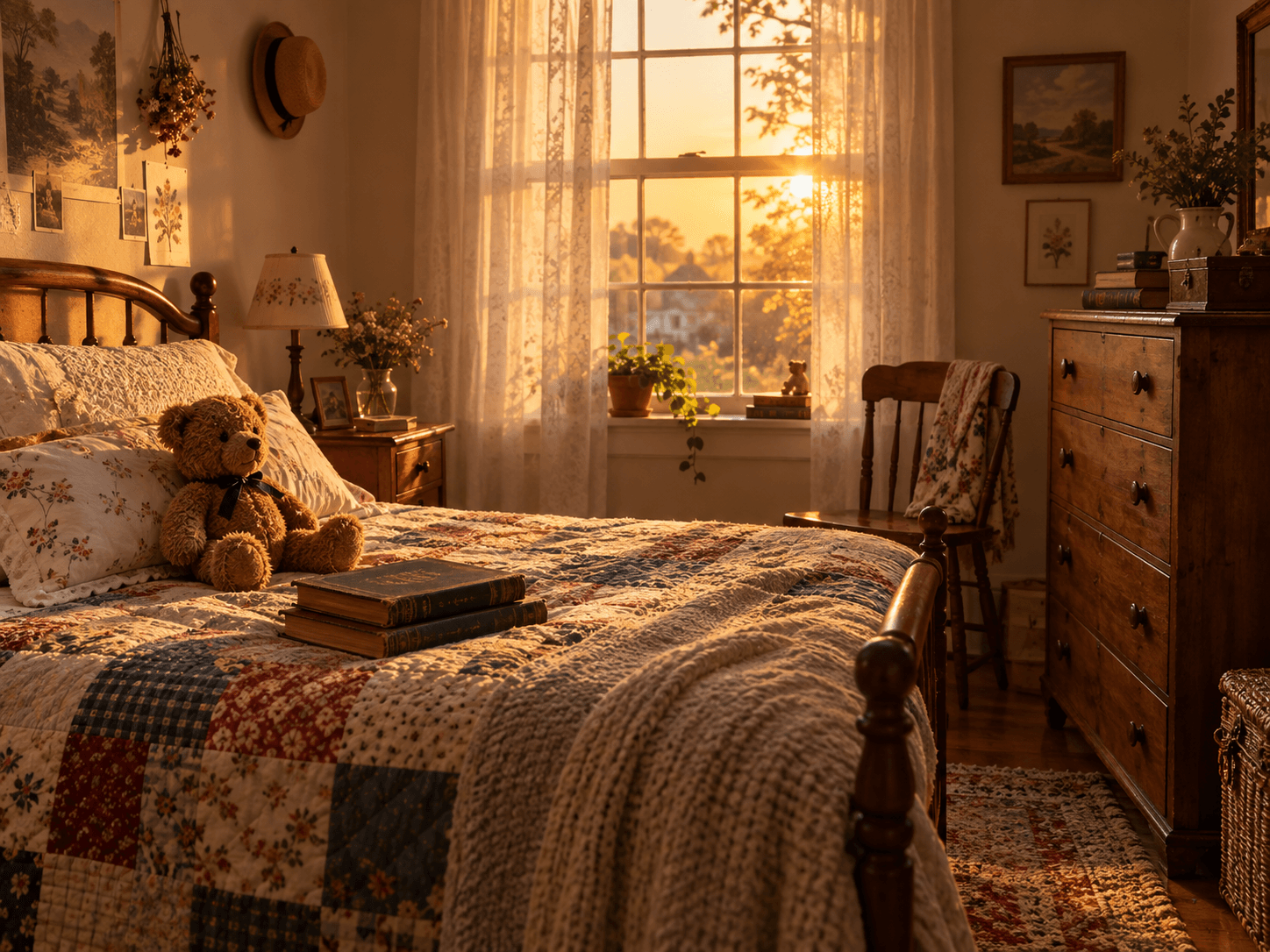
There's a poem in this collection about the last afternoon I ever spent in my childhood bedroom, the day my family finally let the house go. Everyone else was downstairs, calling my name, ready to leave. I sat on the edge of the bed I'd slept in as a boy, a teenager, a young man home from college — and for reasons I still can't fully explain, something in me opened that had never opened before.
I'm not going to describe exactly what happened in that room; the poem does that better than I can here, and it belongs to the book. But I'll say this much: for a little while, sitting there, I understood my mother's life in a way I never had while she was alive to ask about it. Not facts I hadn't known — feelings I hadn't been given permission to feel until I was somehow, briefly, standing inside hers.
It took thirteen years to write that poem down. I'd start to tell people about that afternoon and stop myself, not because it was too painful, but because it felt like it belonged to both of us, and I wasn't sure it was mine to hand out casually in conversation.
That's true of a lot of what's in Jungle of Faith. Some of these poems took decades to become sayable. Writing has never been the fastest way for me to process a memory — it's just the only way I've found to finally put one down.
From the Collection